
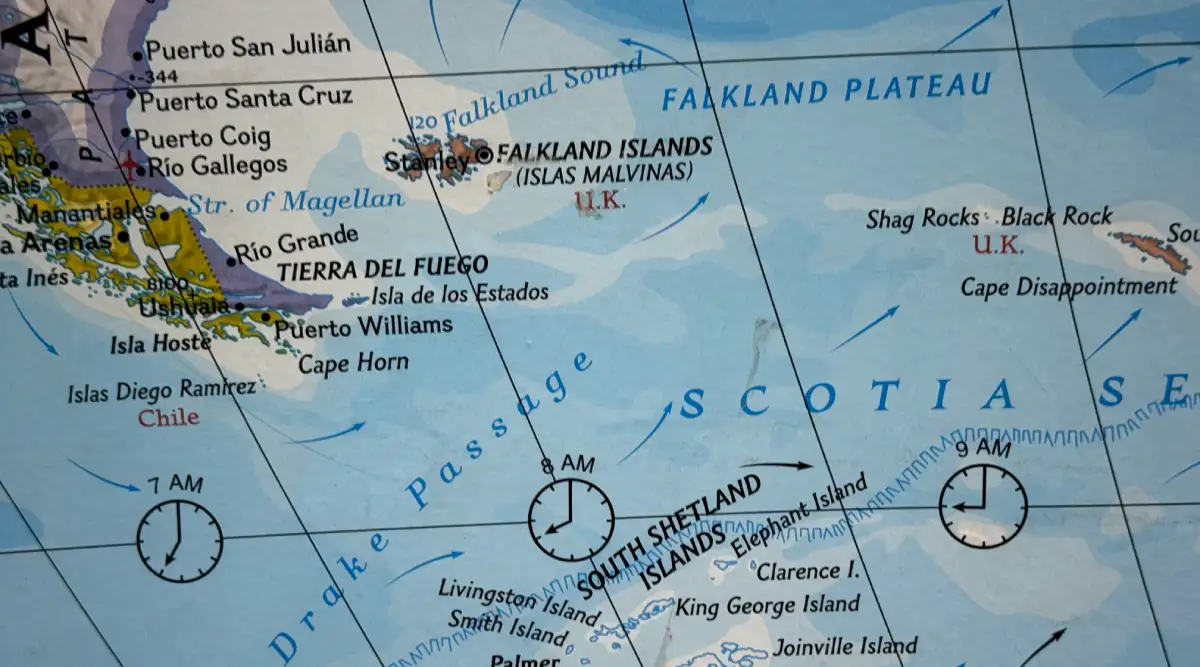



Por: Gavin Short ex miembro de la Asamblea Legislativa de las Islas Falkland***
A través de la bruma del tiempo y la historia
Las Falkland han tenido, por supuesto, una larga historia de comercio y vínculos con la región chilena de Magallanes, que se remontan —hasta donde sé— a unos 150 años atrás. El consulado de Chile se estableció en 1877 para representar los intereses chilenos en la zona.
Si se revisan nuestros antiguos periódicos, abundan las referencias al comercio con Chile y a los barcos que realizaban estas travesías, como el "Rippling Wave" (mencionado por primera vez en la prensa de las Malvinas en mayo de 1890), cuya sección de proa aún podía verse en Punta Arenas la última vez que visité la ciudad, situada en la intersección de la Costanera con Errázuriz.
Hubo otros buques, como el “Estrella” —que terminó sus días aquí en las Falkland en julio de 1902—, el “Consort", el “Garland”, la goleta auxiliar “Celia”, el “Araucanía” y el buque de la Armada de Chile “Baquedano”.
Esos barcos ya no existen. Sus nombres han quedado casi olvidados en los susurros de la historia, al igual que las tripulaciones que sirvieron en ellos; sin embargo, me gusta pensar que tanto los navíos como sus tripulantes permanecen vivos de alguna manera gracias a historiadores como yo. No se puede subestimar el papel que desempeñaron en la configuración de las economías tanto de la zona de Punta Arenas como de las Falkland.
Estos barcos transportaban, entre otras cosas, madera, personas y mercancías hacia nuestras islas, y llevaban consigo pasajeros y ganado ovino en pie.
Resulta difícil determinar con exactitud qué mercancías provenían de Chile y, probablemente, a menos que se descubra algún antiguo manifiesto de carga u otro documento histórico, es posible que nunca lo sepamos con certeza. Lo que sí es seguro es que traían cerveza; he visto un anuncio de 1930 en la tienda “West Store” que ofrecía «cerveza de Punta Arenas (tamaño pequeño) a dos chelines y seis peniques la docena, o tres peniques por botella», y esa cerveza era de la marca Austral.
El pasado reciente
Durante algunos años existió una conexión con Punta Arenas que comenzó siendo modesta pero que, para cuando llegó a su fin —interrumpida por motivos económicos y posiblemente políticos—, había alcanzado un volumen considerable.
Era habitual que las familias de las Falkland pasaran unos días de vacaciones en Chile y visitaran la Zona Franca para buscar y comprar juegos de sala, cocinas y otros artículos, para luego regresar a casa y esperar su llegada.
También se traían frutas y productos frescos, como el queso Colun, que siempre eran muy bien recibidos.
Algunos comercios ofrecen vinos chilenos —que deben realizar el tortuoso viaje a través de los Andes hasta Uruguay para ser embarcados desde allí—; asimismo, en tiempos muy recientes han comenzado a llegar desde Chile yogur, quesos y fruta fresca a través del vuelo de fin de semana de LATAM, aunque los precios son elevados debido al transporte aéreo.
El comienzo de un nuevo amanecer muy esperado
Hacia el final del mandato del gobierno del que formé parte, recibimos la visita de una delegación empresarial chilena en las Falkland; mostraban un gran interés por reactivar los vínculos comerciales y, ciertamente, nos encontraron receptivos, aunque nos enfrentábamos a dos —y posiblemente tres— problemas. Abordaré el tercer problema más adelante en este relato, pero el primero era que las Falkland solo disponían de un buque portacontenedores de gran tamaño; los números no cuadraban para que realizara un trayecto hasta Punta Arenas, sin contar las alteraciones que ello causaría en su itinerario ya establecido entre las islas y Uruguay. Nuestro segundo problema radicaba en que, por más que nos esforzábamos, no lográbamos identificar una carga de retorno que hiciera económicamente viable dicha conexión.
No obstante, el deseo de establecer el vínculo persistía. Fue durante una reunión entre los miembros de la Asamblea Legislativa (políticos de las Falkland) y la junta directiva de la Cámara de Comercio de las Falkland cuando se decidió contactar conjuntamente al alcalde de Punta Arenas. El objetivo era ver si podía interceder para sondear si existía interés entre las empresas navieras chilenas por restablecer una conexión con las islas. Como complemento a una operación ya existente, la idea podría funcionar.
Redacté la carta dirigida a Claudio Radonich y envié el borrador a Mike Summers —entonces presidente de la Cámara de Comercio—, quien introdujo algunas modificaciones; una vez que ambos estuvimos satisfechos con el texto, lo remitimos por correo electrónico a la oficina del alcalde.
Fuimos francos con el alcalde: expresamos nuestra convicción de que tal conexión podría funcionar, pero admitimos que no disponíamos de buque propio y que, a pesar de nuestros esfuerzos, no habíamos logrado encontrar una carga de retorno desde las Falkland hacia Punta Arenas que permitiera rentabilizar ambos trayectos del viaje. También expresamos nuestra convicción de que la conexión comenzaría lentamente, con volúmenes de carga bastante reducidos —ya que aquí la gente necesitaba familiarizarse con la oferta chilena y retomar contactos—, pero que nuestro instinto, dada la trayectoria de crecimiento de nuestra economía, nos indicaba que dicho vínculo prosperaría y se expandiría.
Nunca he vuelto a ver a Claudio para saber cuál fue exactamente su reacción inicial al recibir nuestro correo electrónico, pero debo decir que obtuvimos una respuesta sumamente cordial y positiva, en la que aseguraba que haría todo lo posible por despertar interés en Chile.
Luego, como suele ocurrir, todo quedó en calma. Llegó el momento de las elecciones y me indicaron la puerta de salida.
Durante los meses siguientes, de vez en cuando me preguntaba qué había pasado con nuestra propuesta; fue una gran satisfacción descubrir, meses después de las elecciones, que entre bastidores se había estado trabajando discretamente en el asunto, lo que culminó con el anuncio de la Junta de Desarrollo de las Islas Falkland (Falkland Islands Development Board) de que una compañía naviera chilena, Naviera Easter Island, visitaría las islas.
Dicha visita resultó ser un éxito rotundo; tengo entendido que los representantes de la empresa quedaron profundamente conmovidos por la calurosa acogida y el entusiasmo que mostró el sector empresarial local.
He hablado con muchas personas —ciudadanos de a pie, ajenos al mundo empresarial— y todas, sin excepción, han expresado su entusiasmo ante esta perspectiva, deseando sinceramente que la conexión se materialice y funcione.
En parte, esto se debe (especialmente entre la gente de mi generación) a los recuerdos de cómo era el comercio en el pasado, algo que anhelamos recuperar. Para otros, el atractivo reside en la posibilidad de encontrar una mayor variedad de productos en las tiendas a precios competitivos o en la opción de importar artículos para el hogar; conozco a alguien que espera poder traer ganado (como caballos) desde Chile, mientras que estoy seguro de que la comunidad empresarial mostrará un gran interés en productos como materiales de construcción y, posiblemente, también en mano de obra.
Actualmente hay una delegación comercial en Punta Arenas; aún no he recibido noticias sobre cómo ha transcurrido la visita, pero me sorprendería que los informes, cuando lleguen, no fueran positivos.
El tercer problema: vecinos agresivos
Ya mencioné un tercer problema relacionado con este vínculo: nuestros vecinos, que una vez más persiguen agresivamente una política destinada a estrangular la economía de las Falkland —o, como mínimo, a frenar el progreso y estancar la economía— con la esperanza de que su terrorismo económico nos obligue, de algún modo, a rendir nuestro país.
Siempre han considerado una amenaza cualquier vínculo comercial con Chile. Hace muchos años, cuando recién comenzaba mi carrera política, formé parte de un grupo de empresarios que viajó a Chile (Punta Arenas) a bordo de un avión Twin Otter de Aerovías DAP para explorar oportunidades comerciales.
Los argentinos se enteraron de nuestra presencia y se enfurecieron tanto que prohibieron a Aerovías DAP volar a las Falkland; por ello, la delegación tuvo que trasladarse a Uruguay, donde uno de los vuelos Tristar de la RAF fue desviado para recogernos y llevarnos de regreso a casa.
No ha cambiado gran cosa tras todos estos años: siguen viendo nuestros contactos e intentos de establecer libre comercio con otros países de Sudamérica como una amenaza, y han hecho declaraciones bastante beligerantes expresando su deseo de detener esta iniciativa antes siquiera de que logre ponerse en marcha.
Lo que sí ha cambiado —y es muy bienvenido— son las declaraciones de ministros del gobierno chileno afirmando que las empresas de su país son libres de comerciar con quien deseen y que no tomarán medida alguna para impedir que sus ciudadanos comercien con nosotros. También cabe agradecer al pueblo chileno, que ha manifestado abiertamente su opinión sobre el indignante comportamiento argentino tanto hacia Chile como hacia los vínculos comerciales entre nuestros países.
¿Puede funcionar?
¿Puede funcionar este enlace? Deseo fervientemente que prospere y dé frutos, y no soy el único que piensa así. ¿Cuenta con respaldo en las Falkland? Sí, realmente lo tiene. Simplemente queremos recuperar lo que tuvimos en el pasado: libre comercio con un país con el que mantenemos fuertes vínculos emocionales y al que consideramos amigo.
Desmintiendo una falsedad
Antes de concluir este escrito, algo extenso, permítanme desmentir una falsedad que se ha difundido —y se sigue difundiendo— sobre la propuesta de conexión marítima entre las Falkland y Chile. Cuando Mike Summers y yo redactamos y enviamos la carta al alcalde de Punta Arenas, en ningún momento contemplamos la idea de que dicha conexión sirviera de apoyo a la industria de hidrocarburos de las Falkland. Nuestro único objetivo era restablecer un vínculo histórico que, una vez más, pudiera beneficiar tanto a la población como a las economías de las Falkland y de Punta Arenas.

Legislativa de las Islas Falkland
Proposed shipping link with Chile
Through the mists of time and history
The Falklands have of course had a long history of trade and connections with the Magallanes region of Chile which go back to around 150 years that I am aware of. The Chilean Consul came into being in 1877 to represent Chilean interests here.
If you look through our old newspapers, they are littered with reference to trade with Chile and the vessels that plied that trade, such as the Rippling Wave (first mentioned in Falklands newspapers May 1890) whose bow section could still be seen in Punta Arenas the last time I visited, being situated on the Costanera con Errazuriz.
There were others such as the Estrella who ended her days here in the Falklands in July 1902, the Consort, Garland, the auxiliary schooner Celia, Araucanía and the Chilean Naval vessel Baquedano.
Those vessels are now gone. Their names almost lost to the whispers of history along with the crews who served on them but I would like to think that those same vessels and their crews are in some way kept alive through historians such as myself. The part they played in the shaping the economies both of the Punta Arenas area and the Falklands cannot be understated.
The vessels brought, among other thins, wood, people and merchandise to us and took people and live sheep away.
It is hard to find out exactly what merchandise came from Chile and probably unless an old manifest or other historical document is uncovered, we may never be fully aware. Certainly, they brough beer as I have seen an advert for “Punta Arenas beer (small) two shillings and six pence for a dozen or three pence per bottle” for sale in the West Store in 1930 and that beer was Austral.
The recent past
For some years we did have a connection with Punta Arenas which started off small and by the time it came to an end, forced to stop by economics and possibly politics, it had grown to quite a volume. Falkland families were known to take weeks break in Chile and head to the Zona Franca to look for and purchase sitting room suites, kitchens etc., then head home and wait for them to arrive.
There were fresh fruits and produce such as Colun cheese which were always eagerly received.
Some retailers do stock Chilean wines which have to make the torturous trip over the Andes to Uruguay to be shipped down from there and yoghurt, cheeses, fresh fruit have now, in the very recent past started to arrive from Chile via the weekend LATAM flight but because it is airfreighted, the prices are high.
The beginning of a hoped for new dawn
As the sun was setting on the Government which I was part of, we had a delegation of business people visit the Falklands from Chile and there was an eagerness on their part to re-kindle a trade link and it is very fair to say that they found us receptive but we faced two, possibly three problems. I shall touch on the third problem a little later in this piece but the first problem was that the Falklands really only had a rather large container vessel and the economics just would not stack up for that to make a run to Punta Arenas, as well as the disruption it would cause to its already in place schedule between the Islands and Uruguay. Our second problem was that, try as we might we just could not think of a return cargo that a link would need to make it economically viable.
The desire for the link remained though and it was during a meeting between MLAs (Falklands politicians) and the Board of the Falklands Chamber of Commerce that it was decided that we would make a joint approach to the Mayor of Punta Arenas to see if he might use his good offices to put out “feelers” to see if there was any interest in Chile from companies operating vessels to re-opening a link to the Falklands. As a bolt on to an already existing operation, it could just work.
I went away and wrote the letter to Claudio Radonich and then forwarded my draft to Mike Summers, the then Chair of the Chamber of Commerce who made some amendments and we reached a point where we were both happy with the letter and so it was e mailed off to the Mayor’s Office.
We were honest in what we said to the Mayor. That we thought such a link could work, that we had no vessel and try as we might we just could not think of a return cargo that could go from the Falklands to Punta Arenas to try and make both legs of a journey economic. We also stated our belief that the link would start off slowly with quite low levels of cargo as people here needed to get accustomed to what was available in Chile and re-kindle contacts but that our instincts, given the way our economy was growing, was that such a link would grow and prosper.
I have never met Claudio since to find out just what his initial reaction was when our e mail landed in his office but I do have to say that we received a most friendly and positive reply to the effect that he would indeed do what he could to gain some interest in Chile.
Things went quiet, as they do. The time of the election came around and I was shown the door marked “exit”.
Over the months that followed, from time to time I did wonder what had happened to our approach and it was with utter delight that some months after the election that I found out that things had indeed been going on quietly in the Background which culminated in the Falkland Islands Development Board announcing that a Chilean Shipping Company, Naviera Easter Island, would be visiting the Falklands.
That visit proved to be a huge success and my understanding was that the company representatives were quite overcome by the warmth of the welcome and the enthusiasm shown by the business sector here in the Falklands.
I have spoken with many ordinary people, people who are not business folk and to a person that have all expressed themselves as being excited by the prospect and really wanting the connection to happen and to work. Part of that (certainly among people of my age) is driven by the memories of what used to be in the way of trade and we very much want it back. To others it’s the possibility of getting a wider range of goods in the shops at competitive prices or others talking of getting housing items shipped over, I know one who is hoping that again livestock (such as horses) can be brought over from Chile whilst I am sure that the business community will be more than interested in such items as building materials plus also possibly labour.
A trade delegation is presently in Punta Arenas and I have yet to hear from them how they think the visit has gone but I would be surprised if the reports, when they come are anything but positive.
The third problem – aggressive neighbors
I did mention a third problem for the link and that problem is our neighbors who are again aggressively pursuing a policy of attempting to throttle the Falklands economy or at the very least stall progress and stagnate the economy in the hope that their economic terrorism will somehow force us to surrender our country.
They have always seen a trade link with Chile as a threat. Many years ago, when I was first in politics, I was attached to a group of businessmen who flew to Chile (Punta Arenas) in an Aerovias DAP twin Otter to seek out trade possibilities. The Argentines became aware of our presence and became that infuriated that the banned Aerovias DAP from flying to the Falklands and so the delegation had to travel to Uruguay where one of the RAF Tristar flights was diverted in to pick us up and bring us home.
Nothing much has changed all these years later, they still see our contacts and attempts to have a free trade with other countries in South America as a threat and they have been making some pretty belligerent statements about wanting this enterprise stopped before it has managed to start.
What has changed and is very welcome is statements by Chilean Government Ministers that Chilean companies are free to trade with whomever they wish and that they would not be moving in any way to stop their people trading with us. Thanks must also be given to the Chilean people who have made their feelings known about the outrageous Argentine behavior towards both Chile and trade links between our countries.
Can it work?
Can this link work? I am willing it to function and prosper and I am not alone in that. Is it supported in the Falklands? It is, it really is. We just want to get back what we have had in the past – free trade with a country that we have strong emotional ties to and look on as our friend.
The slaying on an untruth
Before I bring this rather long piece to an end, may I slay an untruth that was/is being spread about the proposed sea link between the Falkland and Chile. When the letter was written to the Mayor of Punta Arenas and sent from Mike Summers and I, the question of it being in support of a Falklands hydrocarbon industry was not in our thought process. We only saw the reestablishment of a historic link that could once again be to the benefit of the people and economies of both the Falklands and Punta Arenas.